.svg)


.svg)


.svg)
.svg)
How to Get to Space When You’re Not an Astronaut
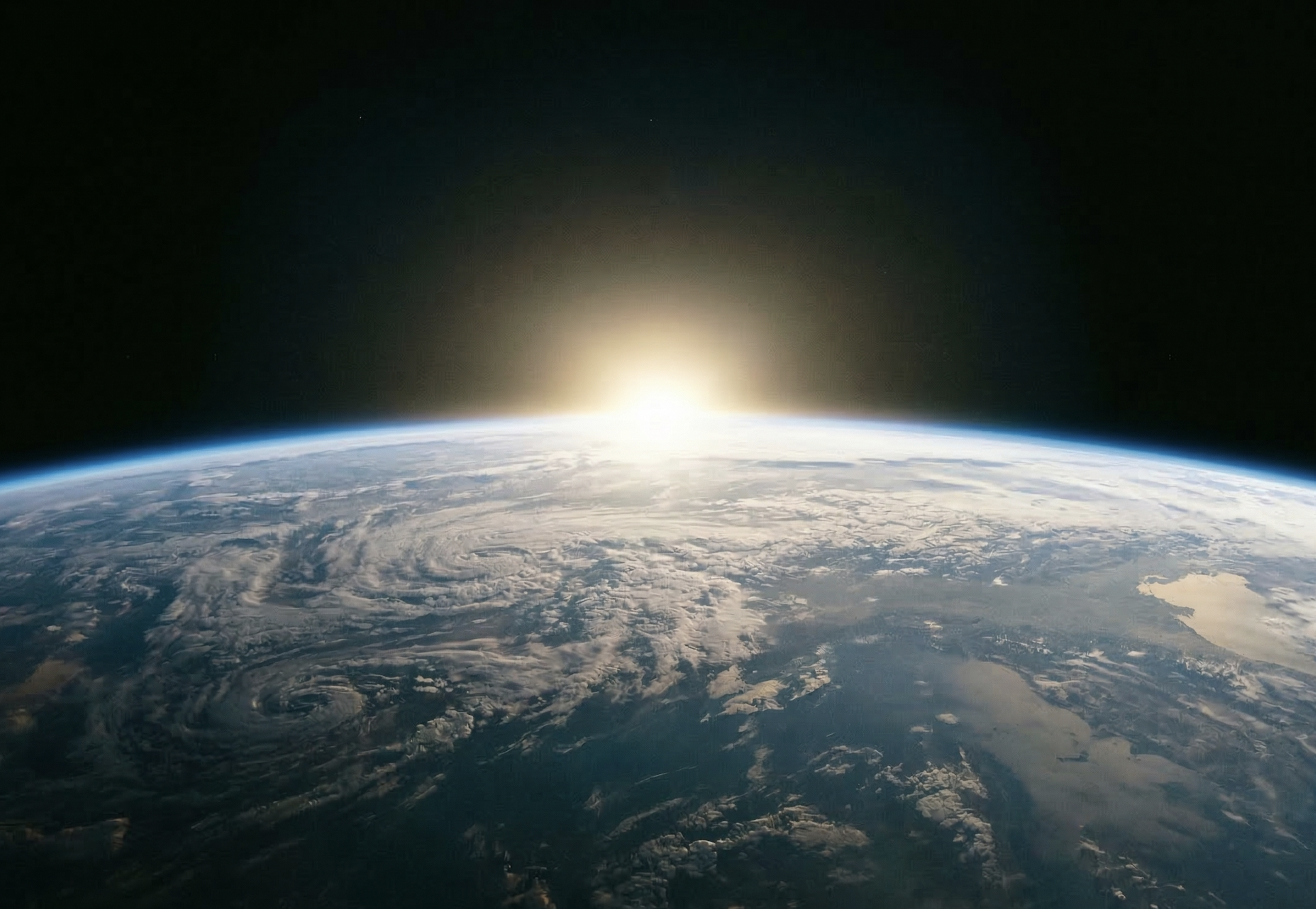
For decades, the answer to “How do I get to space?” was brutally simple: become an astronaut, survive years of selection, train like an elite athlete, master complex engineering, and wait for a national space agency to pick you. Today, that answer has changed.
You no longer need to wear a government-issued spacesuit, fly a fighter jet, or spend a decade preparing for a mission to glimpse Earth from above. Commercial spaceflight, high-altitude aviation, microgravity flights, and stratospheric balloon journeys are opening entirely new ways for private citizens to experience the edge of space.
But not every route is the same. Some involve rocket engines, intense acceleration, and minutes of weightlessness. Others take you gently into the stratosphere, where the sky darkens, Earth’s curvature emerges, and the entire atmosphere lies below you. The difference matters, not only for your body and budget, but also for the planet.
If your dream is to see Earth the way astronauts describe it, without necessarily becoming one, here are the commercial paths available or emerging today — and why Zephalto offers one of the most distinctive ways to live that dream.
What does “going to space” actually mean?
Before choosing your journey, it helps to clear up one important detail: “space” is not a single destination.
The internationally recognised boundary of outer space is commonly called the Kármán line. Above it, the atmosphere becomes so thin that conventional aircraft can no longer generate enough lift to fly normally.
Yet the emotional experience of space begins much lower. At roughly 20–30 km above Earth, in the stratosphere, the sky turns black, the curvature of the Earth appears, and you're immersed in the darkness and silence of space.
Think of it like standing at the threshold of an extraordinary theatre. Orbital travel brings you onto the stage. A suborbital rocket sends you flying near it for a few minutes. A stratospheric balloon gives you time to sit in the front row, absorb every detail, and take in the view without being thrown around by the performance.
Commercial ways to reach space or near-space
The right choice depends on what you actually want. Are you chasing zero gravity? Are you primarily looking for the visual and emotional impact of seeing Earth from above? Or do you want an experience that feels extraordinary without the physical violence of a rocket launch?
Those are very different ambitions, and they call for very different vehicles.
Route one: Stratospheric balloon flights
For many people, a stratospheric balloon journey, such as Zephalto, is the most accessible way to experience space without becoming a professional astronaut.
Instead of launching vertically on a rocket, passengers ascend gradually in a pressurised capsule carried by a high-altitude balloon. The ascent is quiet, smooth, and measured. There is no explosive ignition, no crushing acceleration, and no chaotic re-entry sequence.
Navigate the stratosphere: altitudes above commercial aviation, where the atmosphere thins and the world below looks fragile.You are still protected inside a pressurised environment, yet visually, the experience feels otherworldly.
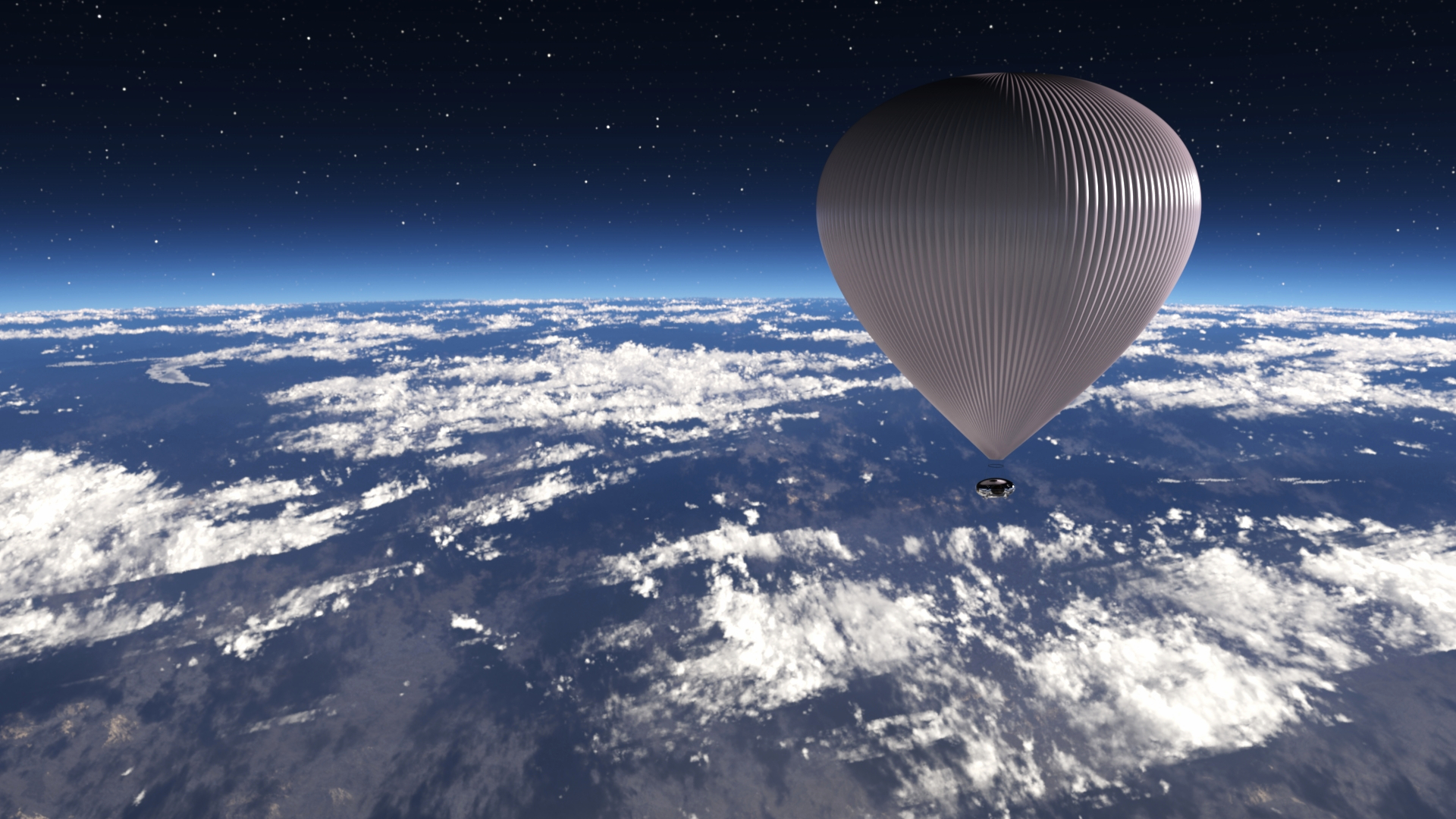
The Zephalto experience
Zephalto is building a distinctly French vision of stratospheric travel: an exclusive, luxury experience designed around contemplation rather than conquest.
Its planned journey takes guests to an altitude of 25 km above Earth in a pressurised capsule lifted by a stratospheric balloon. The full experience lasts six hours: around 1.5 hours of ascent, three hours at peak altitude, and 1.5 hours of descent. At 25 km, guests can see Earth’s curvature, the darkness of space, and a view extending across more than 1,400 km of the planet.
Flights depart from France or the USA, with limited availability during the first year. Our capsules are designed for intimate groups, carrying either four guests and one pilot or later on six guests with two pilots, depending on the configuration.
That intimacy is central to the appeal. It is a rare, slow, highly personal encounter with the planet.
What makes it different?
A rocket flight is a sprint. Zephalto is more like a slow climb to the balcony of the world.
You are not strapped into a high-G launch seat. You are not being rushed through a few minutes of weightlessness before returning to Earth. Instead, you have time—time to watch the blue of the atmosphere fade, time to see the curvature of the horizon, time to share a meal or a meaningful conversation, and time to let the scale of the view sink in.
This unique experience is a way to encounter the Overview Effect: the cognitive and emotional shift reported by many astronauts when they see Earth as one fragile, borderless world. While a stratospheric flight does not reach orbit, it can offer the visual conditions that trigger the same sense of perspective: darkness above, vast Earth below, and the astonishing thinness of the layer that protects all life.
Route two: Parabolic flights
Want to float before you fly higher? A parabolic flight, as offered by Air Zero G, may be your entry point.
These flights use specially operated aircraft that climb sharply, then follow controlled arcs downward. During each parabola, passengers experience around 20 seconds of microgravity. A typical flight repeats this sequence many times, creating a couple minutes of total weightlessness.
It is the closest most people can get to the sensation of floating in space without leaving the atmosphere. You can tumble, glide, and push yourself gently through the cabin—assuming your stomach agrees with the plan.
The downside is that this is not a panoramic space-view experience. You remain at conventional aviation altitudes, and the physical sensation is the main event. It can also be demanding: repeated transitions between normal gravity, increased gravity, and weightlessness can cause motion sickness.
Route three: Suborbital rocket flights
Suborbital spaceflight, such as Virgin Galactic or Blue Origin, is what many people imagine when they hear “space tourism.”
A rocket-powered vehicle climbs beyond, or close to, the recognised boundary of space. Passengers can see the blackness of space, view Earth’s curved horizon, unbuckle briefly in microgravity, and then return to Earth. The entire journey may last only minutes from launch to landing, although the wider experience includes training and pre-flight preparation.
This is the route for people who want to say, literally and technically, “I went to space.”
But it comes with real trade-offs.
Passengers may experience intense acceleration during launch and re-entry. Their bodies must tolerate changing G-forces, rapid movement, and potentially stressful emergency scenarios. Commercial operators also must provide training on emergency responses, including smoke, fire, loss of cabin pressure, and emergency exit procedures. In the United States, operators must disclose the risks and safety record of relevant vehicles, andparticipants must give informed written consent before flying.
Financially, suborbital flights generally require a budget nearing the million of euros or dollars. Emotionally, they deliver a powerful burst of intensity. Environmentally, they demand more scrutiny than near-space balloon travel because rocket launches create direct emissions and can affect the upper atmosphere.
Route four: Orbital space tourism
Orbital tourism, such as Space X, is the deepest, longest, and most demanding civilian space experience.
Instead of simply crossing the edge of space and falling back to Earth, an orbital spacecraft travels fast enough to remain in continuous free fall around the planet. This is where you can live in microgravity for days or weeks, see multiple sunrises and sunsets each day, and experience Earth as astronauts on the International Space Station do.
It is also an entirely different level of commitment.
Passengers typically undergo substantial medical screening, emergency training, spacecraft familiarisation, physical conditioning, and mission-specific preparation. Although private passengers are not necessarily career astronauts, they must be capable of responding safely in a tightly controlled, high-risk environment.
The cost is usually measured in tens of millions, not hundreds of thousands. It is an extraordinary achievement, but it is not yet a mainstream luxury product. It is closer to joining a private expedition to the summit of Everest—with a spacecraft, a launch team, and a planet orbiting beneath you.
Preparation: What do you need before you fly?
The required preparation depends heavily on the route.
For stratospheric balloon travel
A journey such as Zephalto’s reduce drastically physical barriers. Because ascent and descent are gradual and passengers remain in a pressurised capsule, the experience does not involve the intense G-forces associated with rockets.
Now, in order to prepare you for the journey and make sure you enjoy every second of it, we did design a complete program :
· Psychological assessment and meeting with pilots to understand what you will live.
· Pre-flight safety briefings.
· Presentation of the capsule and its onboard equipment.
· Travel preparation, insurance, and contingency planning.
· Final readiness check to spend several hours in a pressurized, high-altitude environment.
· Last but not least: Share your culinary preferences with us for a unique dining experience.
The aim is closer to high-end expedition travel than astronaut boot camp.
For suborbital rocket flights
Rocket passengers may need :
· Detailed medical evaluation.
· Centrifuge or acceleration familiarisation.
· Emergency and evacuation training.
· Safety systems instruction.
· Practice entering and exiting the spacecraft.
· Physical conditioning tailored to the expected G-loads.
Commercial spaceflight is not casual thrill-seeking. Operators have a responsibility to train participants for emergency situations, and passengers must receive clear risk information before agreeing to fly.
For orbital missions
Orbital travel demands the most preparation :
· Comprehensive medical examinations.
· Months-long extended mission training.
· Microgravity adaptation.
· Emergency drills.
· Spacecraft systems orientation.
· Survival, communication, and operational procedures.
In short: the longer you stay, the more capable you must become.
The financial reality
Space tourism is becoming more diverse, and companies such as Zephalto want to provide access to everyone.
A parabolic flight may cost a few thousand euros and can rise into the tens of thousands. A suborbital rocket seat will cost almost a million euros. Orbital travel enters the realm of ultra-high-net-worth expeditions.
Zephalto occupies a compelling middle space: a €180,000 per-person experience that delivers a prolonged, intimate, luxury encounter with space and the visual drama of Earth from 25 km above.
That distinction matters. If your goal is a certificate proving you went into outer space, you need an orbital flight. If your goal is to dive into the darkness and silence of space and feel transformed by the sight of Earth, a calm, extended stratospheric journey may offer more time to actually experience that transformation.
Environmental impact: The question you might ask
Space tourism carries a responsibility problem.The view of Earth can inspire environmental awareness, but getting there can also create environmental costs.
Rocket launches can produce carbon dioxide, water vapour, soot, and other emissions at altitudes where their atmospheric effects may be particularly significant. The exact footprint varies by fuel type, vehicle design, launch profile, passenger count, and flight frequency. Orbital missions also require enormous infrastructure, propellant, logistics, and manufacturing resources.
Jet-based near-space experiences rely on aviation fuel and therefore carry the familiar climate impact of high-altitude flying. Parabolic flights can be especially energy-intensive per passenger because of their repeated steep flight profiles.
Stratospheric balloon travel offers a potentially lower-carbon alternative to rocket and jet-based experiences. Zephalto guarantees sustainable access to the stratosphere with near-zero emissions, generating a low-carbon footprint of just 26.6 kg of CO2 per passenger, the equivalent of a 200-km car ride.
The responsible traveller should not ask only,“Can I go?” They should also ask, “What kind of journey am I supporting?”
Why Zephalto may be the ultimate space experience
Zephalto is not trying to imitate a rocket launch. It is offering something arguably rarer: the chance to slow down in front of the most extraordinary view on Earth.
At 25 km above France, you are high enough to see the planet with new eyes. The horizon curves. The sky darkens. The atmosphere appears not as an abstract scientific concept, but as a delicate blue veil wrapped around a living world.
You have three hours at peak altitude, not three frantic minutes. You can absorb the view, speak with the people beside you, and let the perspective settle. That is the difference between seeing something and truly experiencing it.
Conclusion
You do not need to become an astronaut to reach toward space anymore. From parabolic flights to suborbital rockets and orbital missions, civilian options now span everything from a few seconds of weightlessness to weeks above Earth.
Yet the best route is not automatically the highest or fastest one. For some, the ultimate experience is not the adrenaline of launch or the prestige of orbit. It is the quiet, unforgettable moment when you see Earth’s curve beneath a black sky and understand, perhaps for the first time, how small, beautiful, and interconnected our world really is.
That is where Zephalto stands apart: not as a substitute for spaceflight, but as a refined, immersive, and potentially lower-carbon way to live the emotional essence of the space experience. We live in a time our ancestors only dreamt of, it’s time to enjoy it.
.svg)
.svg)